
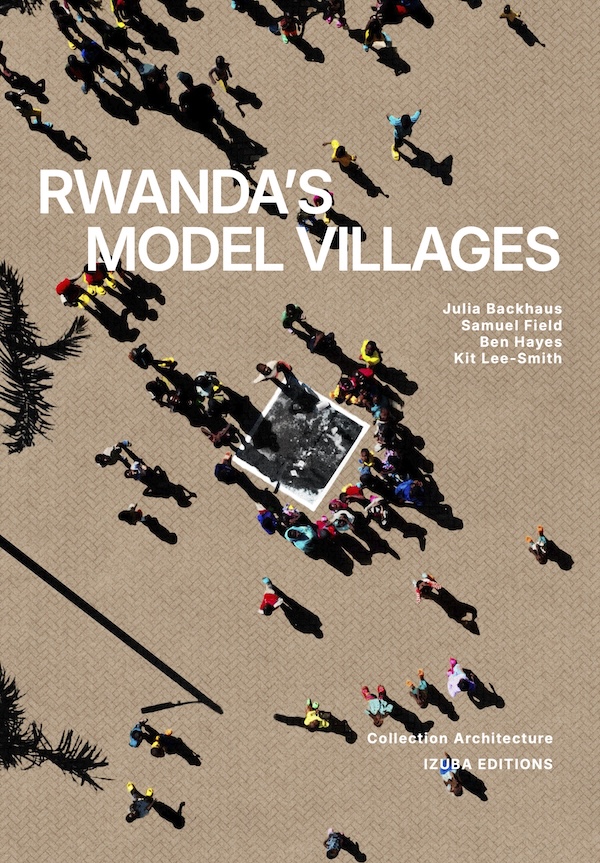
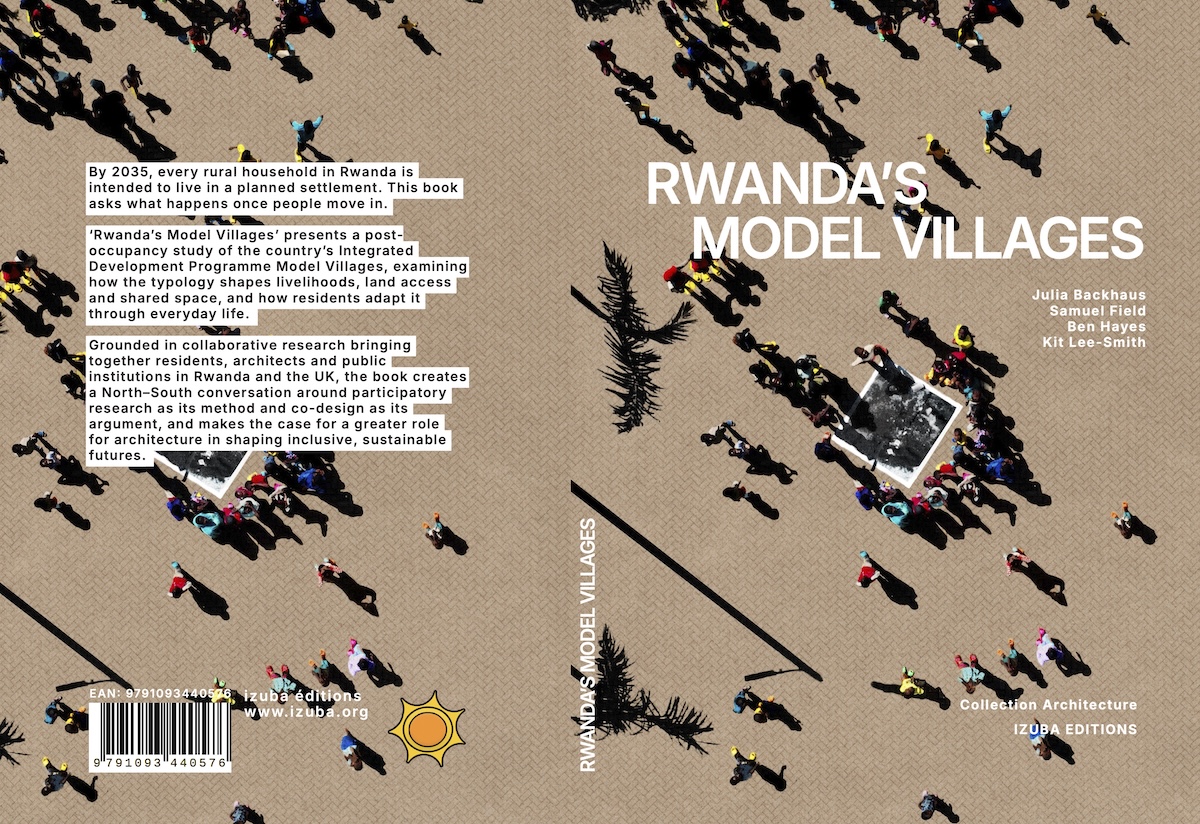
By 2035, every rural household in Rwanda is intended to live in a planned settlement. This book asks what happens once people move in.
“Rwanda’s Model Villages” presents a post-occupancy study of the country’s Integrated Development Programme Model Villages, examining how the typology shapes livelihoods, land access and shared space, and how residents adapt it through everyday life.
Grounded in collaborative research bringing together residents, architects and public institutions in Rwanda and the UK, the book creates a North–South conversation around participatory research as its method and co-design as its argument, and makes the case for a greater role for architecture in shaping inclusive, sustainable futures.
Authors: Julia Backhaus (lead author), Samuel Field, Ben Hayes, Kit Lee-Smith
Référence
Table des matières
Preface
1. Introduction
2. The Rwandan Model Villages: a North South conversation
3. Model Villages in context
4. The Integrated Development Model Village Programme
5. The Model Village and everyday life: Karama
6. The Model Village and everyday life: Kinigi
7. Karama and Kinigi: five findings
8. Building with local resources
9. Looking ahead: lessons for design, practice and future settlements
10. Afterword: Beyond the IDP model – towards integrated urban neighbourhoods
11. Appendix: workshop source materials
12. Bibliography
13. List of figures
14. About the authors
Fiche technique
— Titre : Rwanda’s Model Villages
— Soustitre : A post-occupancy study of the Integrated Development Programme Model Villages
— Lague: Anglais
— Dimension:170 × 240 mm
— EAN: 9791093440576
— 234 pages
— llustrations : 14 chapters, with a bibliography and a figure list
— First edition: 2026
— izuba éditions, Kigali, Rwanda
Auteur(s)
Julia Backhaus
Architect, Associate Professor at UCL’s Bartlett School of Architecture and founding director of Fluxarchitects, London. Lead author of this book, she works at the intersection of architecture and global health environments, collaborating with governments, universities and communities across Europe, Africa and Asia.
Ben Hayes
Architect, researcher, educator and founding director of Unknown Works. His work spans healthcare, education and community hubs in Uganda; affordable housing prototypes and community infrastructure in Mongolia and rural China; and energy infrastructure. He has taught at UCL and researched rural–urban transformation at the University of Hong Kong.
Samuel Field
Researcher and architectural designer at Unknown Works. His research examines rural Rwandan housing, landslide impacts, circularity and sustainable supply chains. His experience spans complex international projects and renewable energy infrastructure.
Kit Lee-Smith
Architect and researcher at RSHP in London. His research project, Transboundary Massif, explores geopolymer materials made from Rwandan mine tailings as alternatives to Portland cement, connecting material experimentation, local production and community construction.
Informations complémentaires
| Dimensions | 17 × 24 cm |
|---|---|
| Auteur | |
| Pages | 234 |
| Format | Broché |
Couverture / Illustrations
© 2026 Julia Backhaus, Samuel Field, Ben Hayes and Kit Lee-Smith.
Acheter
Livraison à Kigali et/ou
e-books (formats numériques)
Fr 30 000
Livraison par coursier partout dans Kigali (sous réserve de disponibilité) ou téléchargement sur ce site
Expédition en France
& dans le monde

Commander ce livre depuis la France (expédition partout dans le monde) sur le site de notre partenaire LivreLibre.fr
Commandes libraires et associations
Extraits
Case studies
Two villages: Karama (Nyarugenge District, inaugurated 3 July 2019, 240 households) and Kinigi (Musanze District, inaugurated 4 July 2021, 144 families). Sources: Rwanda Ministry of Defence announcements.
Method
Exploratory comparative post-occupancy study. Fieldwork in Karama and Kinigi in summer 2022: mapping workshops with residents, interviews, 3D documentation of selected spaces.
Partners
Bartlett School of Architecture, UCL, and School of Architecture and Built Environment, University of Rwanda. Support: UCL Global Engagement Fund; RIBA Scott Brownrigg Award for Sustainable Development (2023).
Context
Vision 2050 sets the target of every rural household living in an integrated planned settlement by 2035. At the 2022 census, 72.1 per cent of Rwanda’s population lived in rural areas.
Copyright
© 2026 Julia Backhaus, Samuel Field, Ben Hayes and Kit Lee-Smith. Research photographs and fieldwork material © the authors and research team. Third-party photographs, maps and drawings remain the copyright of their rights holders.
On en parle
À venir…
Commentaires